Recently we have been receiving an increased number of phone calls asking if we declaw cats.
Declawing is an ethically controversial procedure that entails amputation of the third “toe bone.” In
comparison to a human it is the same as cutting off the finger at the last joint. There are effective
alternatives.
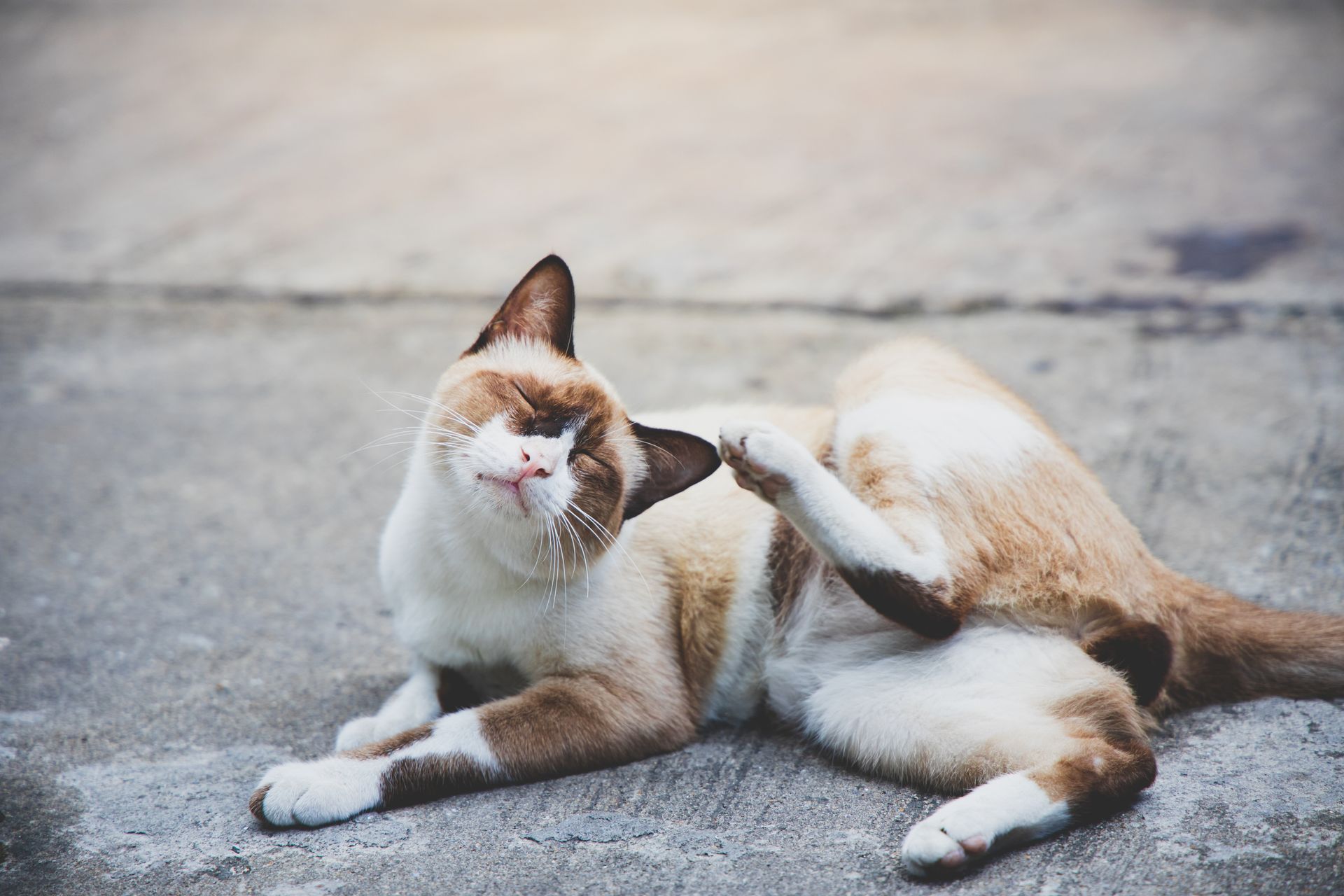
Scratching is a normal cat behavior. It allows them to groom the claws, leave scent markers and
stretch their bodies. Providing numerous suitable surfaces will discourage them from using furniture,
drapes, walls or doors. Cats that go outdoors may do all their scratching outside. For cats mostly
indoors or indoors only, several scratchers of different textures and styles should be available.
Scratchers should include vertical types that extend above the cat’s stretched out height as well as
slanted and horizontal options. Some cats prefer sisal or loose carpet while others like trays filled
with cardboard on end or even others prefer logs or wood planks. Rubbing tuna oil on the surface or
for some, cat nip sprinkled on a horizontal surface can increase its attractiveness. Food rewards can
also be given when the cat is seen using the scratcher. As long as it doesn’t cause your cat to become
anxious you can gently rub its paws on the scratcher and then give a food reward.
The placement of the scratchers is very important also. Placing near a sleeping area since cats stretch
or scratch after waking up or near an object that you don’t want scratched like the corner of the sofa
can be effective. Prominent areas such as just inside a doorway to a room or in rooms with frequent
activity are best. While I’ve always had 3 – 4 cats in my house, I’ve never had a scratching problem
but there are a half dozen scratchers of various types throughout.
Besides making it as desirable as possible to use the scratchers you should make it undesirable to use
furniture and other items when bringing home a new cat, re-training an existing cat or adding a new
piece of furniture. You can place double-sided cellophane tape on the corners and tops to discourage
scratching. On rugs and carpeting you can spray or rub on citronella scent to repel cats from those
areas. Tweed type upholstery can be irresistable and is best avoided or re-covered. Use the old fabric
to staple onto scratchers to encourage their use. For sofas you can take a section of a vinyl carpet
protector and turn it upside down so the knub (which are normally used to keep it from sliding around
on the carpet) are facing up. If the cat continues to use one to two pieces of furniture it may be
necessary if possible to isolate the furniture from the cat at least when not home.
Since scratching on furniture may not be completely eliminated there are methods to reduce the
damage done. Regular claw trimming can be done with human nail trimmers in a “side-ways” fashion
so that the claw is not split. If possible start claw trimming as kittens and if your cat doesn’t like claw
trimming then start slow. Trim claws in a calm environment with breaks as needed and food treats.
If you don’t want to trim claws, gluing plastic nail caps over the claws is an option but this process
needs to be done every 4-6 weeks.
Physical punishment for inappropriate scratching should be avoided as it can cause fear or aggression
towards people in the household and at best the cat will only learn not to scratch while people are
around. Indirect punishment only works if people are out of sight so that the cat learns that
inappropriate scratching is unpleasant even if people are not present. Motion detectors on compressed
air spray cans (Ssscat®) or that activate a loud noise (Amtek Scraminal®) can keep cats off tables,
counter tops and sofas. Booby traps such as a door alarm on a drape and a stack of plastic cups set to
topple when a cat scratches can be effective deterrents.
Declawing or more appropriately termed partial digital amputation is an unnecessary surgery. It is
banned in more than 20 countries and bans are starting to take effect in many areas of the United
States. As we learn to understand the cat’s behavior and allow it to express itself as it would naturally
this drastic solution becomes unnecessary.