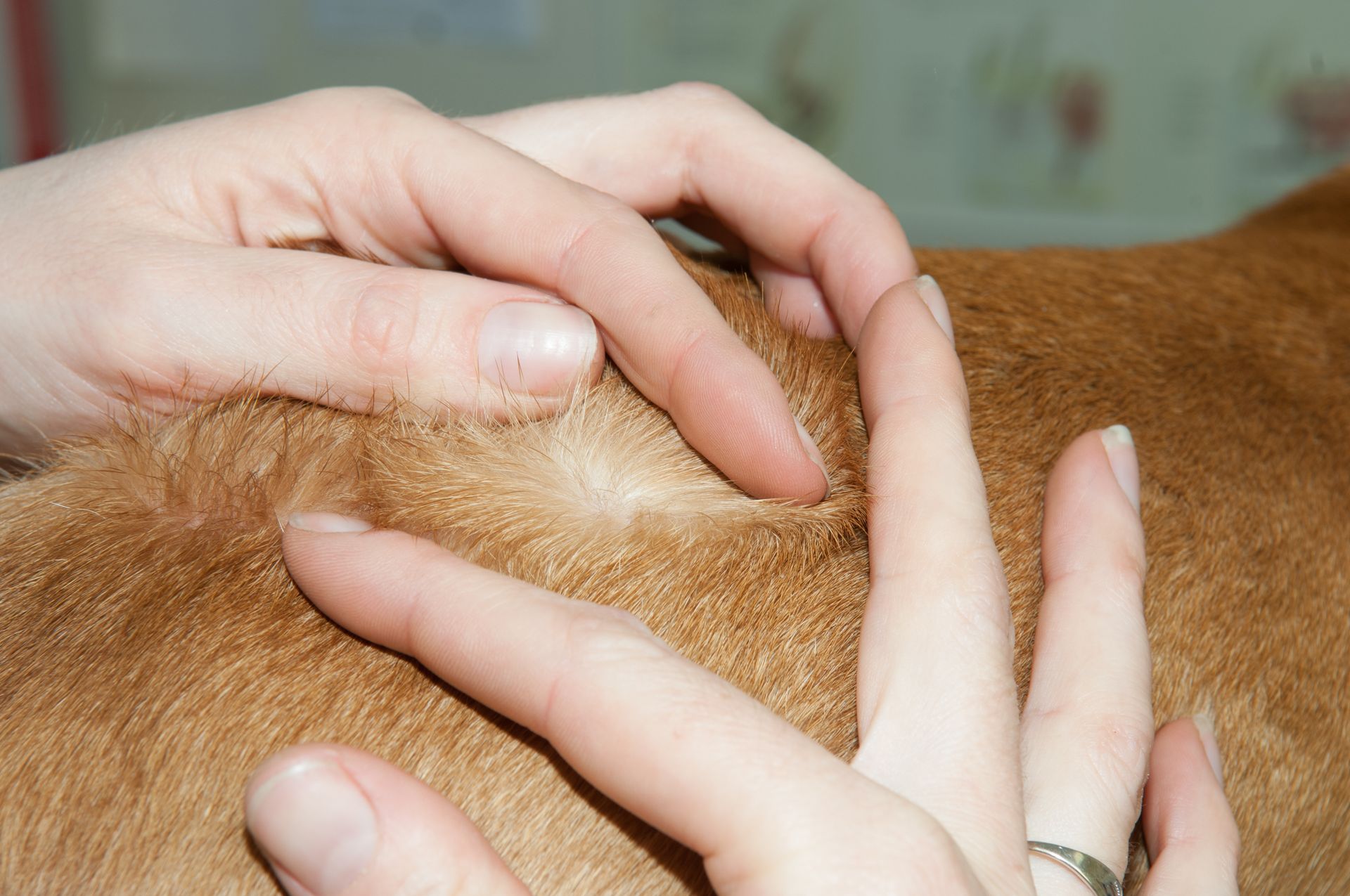
Obesity is an important problem with 60% of dogs in the US being overweight. With so many dogs being overweight pet owners frequently have difficulty identifying what is a normal weight. With a dog of normal weight, you can easily feel the ribs when running your hands down the sides of the chest. There can be a thin layer of fat over the ribs. When looking down from above, there should be a visible waist and looking from the side a tuck or upward slope at the abdomen. There should be minimal fat, no “love handles” at the sides of the lower back.
A number of health problems can occur or be made worse with obesity. Obesity can compromise a dog’s ability to breathe. The fat forms a constricting band around the chest making it harder to breathe and take deep breaths. Fat within the abdomen pushes the diaphragm forward, again restricting lung capacity. The restriction of breathing also restricts the dissipation of heat from the body and the added insulation further promotes overheating.
Being overweight can make arthritis and back problems worse by placing additional stress on the joints and creating more pain. This can be a downward spiral by leading to decreased mobility and in turn, greater obesity. With both problems, be it a chronic cough from a respiratory disease or pain from chronic arthritis can sometime be managed well with weight loss alone.
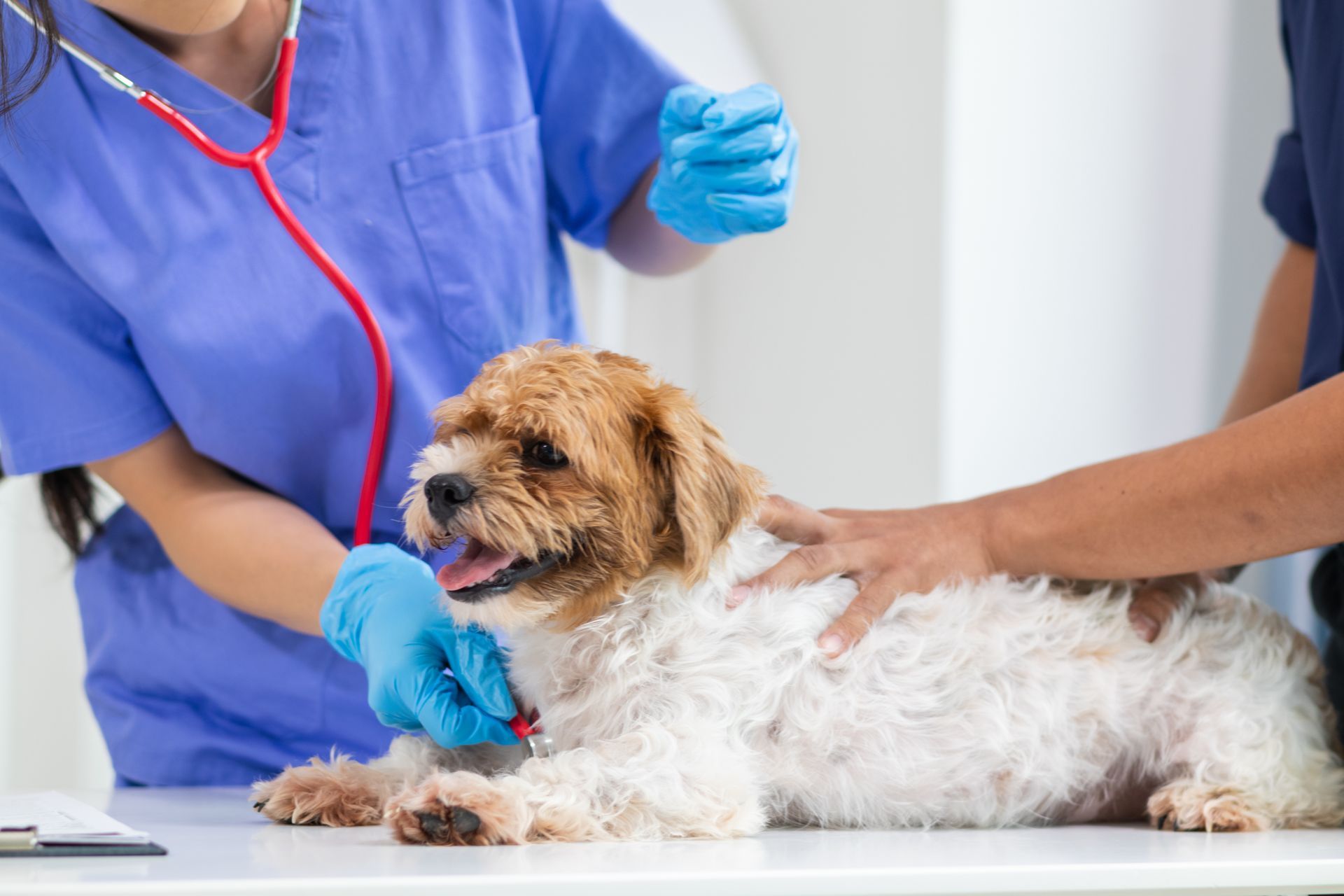
Treatment for obesity involves modifying feeding practices, increasing exercise and decreasing caloric intake. There are diseases that can lead to an increased risk for obesity. Your veterinarian should examine and test for these as appropriate before recommending dietary changes. Generally one can start with feeding 75% of the current caloric intake. Dogs can safely lose 1 to 2 % of body weight per week. Prescription weight loss diets are much lower in caloric concentration than “lite” or “less active” diets which are meant to prevent weight gain and not cause weight loss. Increasing exercise can help but dietary changes are more important in promoting weight loss. Restricting feeding to meals rather than leaving food out or frequently offering food encourages snacking which interferes with weight loss.
Treats need to be stopped or if you must, then pieces of apple, raw carrot or green beans. For many dogs “treats” can be their usual food given in a small amount by hand since this action reinforces them being an important family member which in itself is the real “treat.”
In helping your dog lose weight it is important to determine what their ideal weight should be. A general objective determination can be done based on your dog’s body condition score (BCS). Your veterinarian can determine where your dog is on a 9 point scale and can use this to determine how much weight is to be lost. A BCS of 4 to 5 is normal and every 1 point above this means they need to lose 10 to 15% of current body weight. If your dog has a BCS of 6, they need to lose 10 to 15% of their body weight and if they have a BCS of 9, they need to lose 40 to 60% of their body weight.
Once an ideal weight is achieved, your veterinarian can help you determine how much to feed to maintain that weight. For dogs that really like to eat, it can be helpful to remain on the prescription weight loss diet so they are satiated with the amount fed. Certainly, life style changes to increase your dog’s daily activity may be easier now to maintain an ideal body weight.
Making simple dietary and lifestyle changes can be difficult but a healthy weight increases not only length but also the quality of your dog’s life.