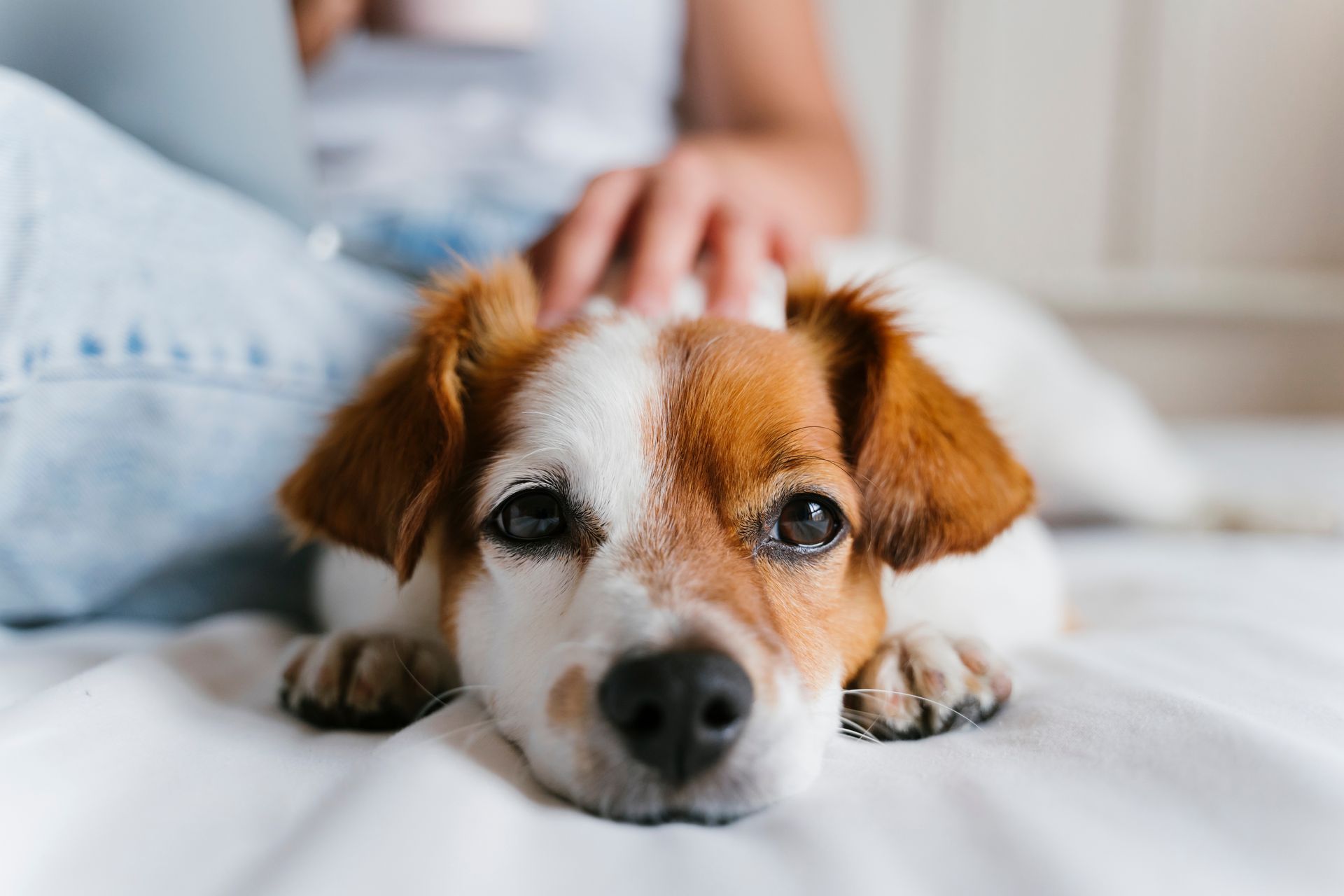
Anxiety and phobias are common in dogs and often result from not learning to habituate to novel environments and experiences during the first 6-8 months of life. Signs of anxiety include pacing, panting, vocalizing, shaking, drooling and being hypervigilant. A lowered body posture, ears back, tail tucked and looking away from the perceived threat can also be seen. A phobia is a fearful response to a specific stimulus such as noise, an object or place.
Treatment must include limiting exposure to situations that create fear and anxiety, especially in the early part of treatment, since repeatedly triggering anxiety will make the problem worse. Avoid comforting your dog when anxious because this rewards the behavior.
Often anti-anxiety medications are needed to reduce anxiety so that behavioral modification can be effective. Medication does not replace behavioral modification and should not be used alone except when used for short duration anxiety inducing events such as fireworks, storms, car travel and family (children) visits. For dogs that are anxious during most of the day a maintenance medication is used alone or in combination with a rapid, short-acting medication. This medication is used for several months after the anxiety is controlled. In some cases the medication may be needed lifelong.
Treatment begins with “nothing-in-life-is-free” training where the dog is required to earn all things. This is not a punishment but rather establishes a comforting predictive manner of obtaining things from family members. Along with this, the dog learns to focus on family members, sit and settle and be rewarded for being relaxed and taking a breath. Once this is learned in a quiet and calm home environment, the dog can be gradually introduced to anxiety-provoking stimuli. This desensitization can be coupled with counter conditioning so that the dog associates an unpleasant stimulus with a positive reward. For example, a dog that becomes anxious when seeing another dog when being walked, is told to sit and focus on their person as soon as another dog is spotted at a distance before becoming too anxious. A food reward is given if the dog settles and relaxes and then is turned and walked away from the approaching dog. Next time one allows the distance between to become shorter but before heightened anxiety occurs. After sitting and focusing on their person a treat is given and then turn and walk away. This is repeated while gradually shortening the distance to the approaching dog. Eventually the dog should learn to sit, focus and relax while another dog passes on the other side of the street.
Similar to counter conditioning is response substitution where an undesirable response is replaced with desirable one. For example, a dog barking and lunging on a leash is shown a tennis ball to focus on or a dog hearing scary noise is given a treat. This is not rewarding the dog for an undesirable behavior but rather learning a different response than being anxious.
Improvement in anxiety will generally be slow and may remain for life. It’s important to be aware of what the dog is able to experience and work within those parameters. Attempting to repeatedly make the dog experience situations that cause overwhelming anxiety may harm long-term improvement and lead to a worsening of symptoms or even aggression. Encounters where the intensity of the anxiety-provoking stimulus is controlled and if needed, calming medications, allow the dog to cope and learn a different response than being anxious.