Commonly referred to as an ear infection, the inflammation of the ear canal is what allows organisms often times normally present in the ear canal to result in an infection. The organisms are opportunists and not contagious. Ear inflammation and the commonly resulting infection is triggered by an underlying allergic condition. The allergy causes the ear to become inflamed which disrupts the normal protective barrier. Once disrupted, organisms like malassezia, a yeast organism, or bacteria, that are typically in the ear, take advantage of the situation and invade the lining of the ear canal. This results in additional inflammation causing more discomfort and irritation.
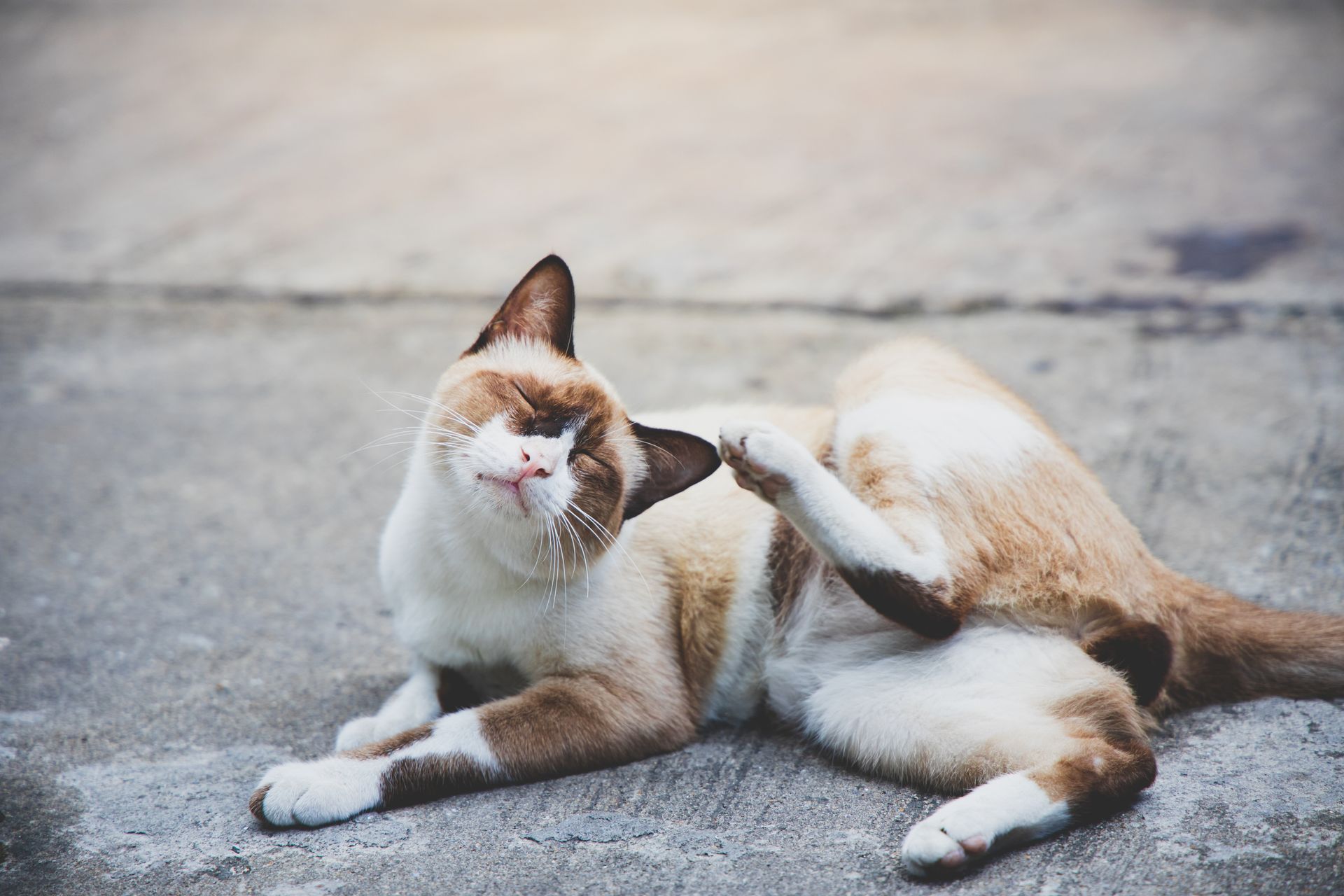
Symptoms of ear inflammation can include head shaking, scratching at the ear, rubbing the ear on the floor, or tilting the head so that the affected ear is pointed down and a foul odor of the ear is often detected. Inflammation of the ear is most commonly a symptom of an underlying allergy, likely either Atopy, an allergy to something in the environment, or a food allergy or sometimes both.
To effectively treat ear inflammation, both the underlying cause and subsequent opportunistic infection need to be treated. If this is a frequently recurrent problem, i.e. within 3 months, then evaluation of the nature of the allergy is needed to help prevent recurrences. Microscopic evaluation of the ear debris can determine if it is bacteria or a malessezia or sometimes both. This allows specific anti-microbial treatment to be started. Sometimes a catch-all medication, an antibacterial, antifungal and corticosteroid is sent home to be put in the ear. Unfortunately, this is not always effective and can encourage development of antibacterial and antifungal resistance which can be a problem with future treatment. Bacterial resistance to antibiotics is encouraged by indiscriminate use of antibiotics and with recurrent use.
Treatment always includes a topical corticosteroid placed in the ear along with an antibacterial and/or antifungal agent as indicated on microscopic examination. An anti-inflammatory/anti-itch medication given by mouth is always needed and sometimes an antibacterial and/or antifungal given by mouth also. With recurrent bacterial infections, a culture to determine which antibiotic will be effective, is needed and given for an appropriate length of treatment. The ear canal lining can be thickened with bacteria deep inside the thickened lining. The thickened ear canal lining hinders exposure of the bacteria to an antibiotic either placed in the ear or reaching it through the blood stream. This then effects the duration of treatment. If chronic inflammation is present then effective treatment often requires corticosteroid in the ear and orally.
Importantly, the ear canal needs to be kept free of debris. Otherwise, medication diluted in ear canal debris is not reaching the lining of the ear canal. This may require multiple ear flushes or even suctioning the material from the ear canal. Initially, this may even not be possible due to extensive narrowing of the ear canal from the inflammation. Also, until the inflammation is controlled it encourages rapid re-formation of the ear canal debris due to inflammation in part increasing ceruminous gland production.
Resolving ear inflammation can sometimes require long-term treatment. Two factors are key in treating. One is that the inflammation must be controlled which often necessitates oral corticosteroids. Two is the complicating infection needs to be eliminated, which requires that an effective antimicrobial is used both in the ear and possibly, orally for a sufficient duration of time and that the ear canal is kept free of debris so that the medication can reach the ear canal lining. Preventing frequent return of the problem necessitates determining the source of the inflammation and medication or special diet used to help prevent the return of the inciting allergy.