There are primarily 2 uses for ultrasound in pets. One is evaluation of organs in the abdomen and the other is evaluation and determining significance of heart murmurs and heart disease.
Evaluation of abdominal organs may be indicated due to symptoms associated with an organ or results from physical examination or laboratory tests. X-rays can be helpful to evaluate abdominal organ size and shape but ultrasound provides a cross sectional image to evaluate for architectural changes within an organ. The tests are complimentary to each other and not a duplicate. Organs evaluated include the liver, gall bladder, spleen, kidneys, urinary bladder, reproductive organs, stomach, pancreas, intestines, adrenal glands and lymph nodes. Ultrasound is also superior to x-rays to evaluate for the presence of abdominal fluid and if present, to guide a needle to facilitate sampling of the fluid. Ultrasound is extremely valuable to guide hypodermic needles into abdominal organs to aspirate tissue or fluid. This has largely replaced the need to perform an exploratory surgery of the abdomen, decades ago, to evaluate organs and obtain samples for a diagnosis. When aspirates are insufficient for a diagnosis, a biopsy needle can be used with ultrasound guidance to obtain information.
Other than abdominal organs, tissues that can be evaluated with ultrasound include the eye, some tendons, tissue just under the skin like thyroid glands and in some cases tissue within the chest. Organs that can be evaluated in the chest are usually limited to the heart. This is because the high frequency sound waves used to create the live images do not pass through air. There must be an air-free interface between the ultrasound probe and the organ to be evaluated. Only the heart has a point of air-free contact with the body wall. Exceptions include fluid surrounding the lungs and enlargement of an organ like lymph nodes or a mass such that it contacts the chest wall. Besides guiding a needle for sampling of fluid for diagnostic purposes, ultrasound can be used therapeutically to guide removal of fluid that is compressing the lungs and heart when abnormally present.
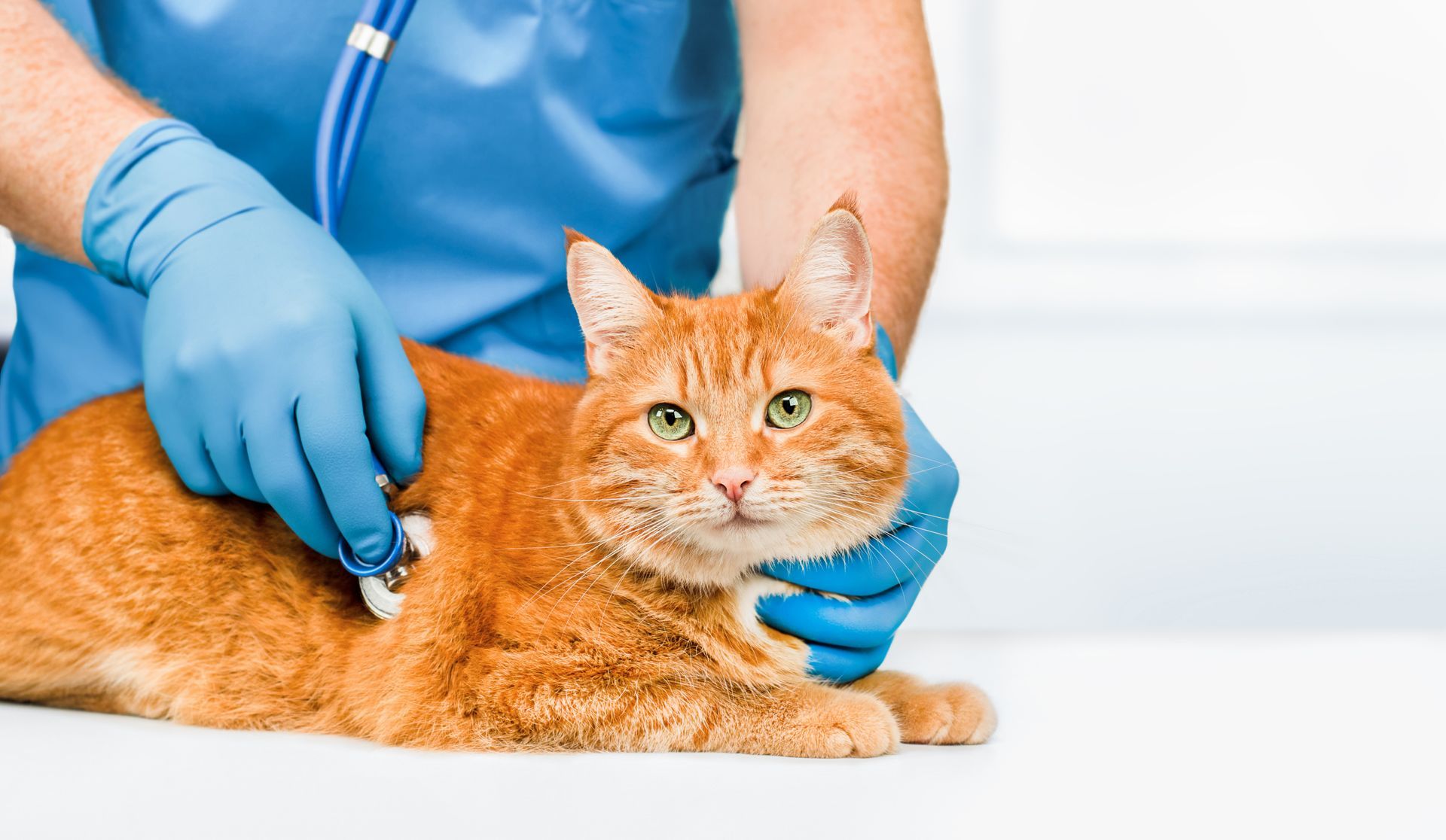
Evaluation for heart murmurs and heart disease is the other primary use of ultrasound. A murmur is an abnormal sound that is caused by turbulent blood flow. Normally blood flows through the heart in a quiet, smooth manner – called laminar flow. If there are obstacles or narrowing within the heart then this causes turbulent flow which is heard as a murmur. The presence of a murmur doesn’t mean that the heart is necessarily an ineffective pump but that a significant problem may be present. Chest x-rays to evaluate for changes in heart size and shape and changes in vessels going to and from the heart can be helpful but does not allow for cross-sectional imaging and more importantly, an assessment of the dynamic function of the heart.
In cats in particular, heart disease can be present and the overall heart-size and shape normal on chest x-rays. Unfortunately, cats can also have significant heart disease without a murmur being present. Therefore, ultrasound of the heart is the only test to determine whether or not cats have heart disease.
Ultrasound of the heart allows for determination of the source of a murmur and more importantly, the impact the cause is having or likely to have on heart function and complications associated with the problem. In some cases such as the relatively common degenerative mitral valve disease, medication can be used as appropriate to slow or even prevent progression to possible heart failure.
Ultrasound is painless and performed in a quiet dark room. Most pets are able to lie comfortably without stress and with minimal restraint during the procedure. Most pets do not need sedation.
While ultrasound does have some limitations such that it cannot pass through thick bone or air, it has frequent and daily applications in practice. Uses include obtaining urine samples from small urinary bladders; checking for fluid in the abdomen, chest and around the heart and guiding a needle to sample or remove the fluid; and organ evaluation in birds and reptiles where x-rays have limited usefulness due to lack of fat surrounding their organs.
Ultrasound ultimately contributes greatly to rapid, accurate and less invasive evaluation of many problems allowing for timely decisions on treatment options.